


Join Us for Recovery City Documentary Screening at the Egyptian Theater in Dekalb
Recovery is never a straight line, and no one should have to walk it alone.
On Thursday, November 12, 2026, at 6:30 PM, community members are invited to gather at the Egyptian Theater in Dekalb for a free screening of Recovery City, a documentary that explores the hardships of a woman entering recovery from substance abuse. Admission is free, and the evening is open to anyone who wants to listen, learn, reflect, and show support for people and families affected by addiction.
This is more than a film screening. It is a chance to sit together as neighbors and face a subject that often stays hidden behind closed doors. Substance use disorder can touch any family, any street, and any circle of friends. Recovery takes courage, but it also takes community, patience, and understanding.
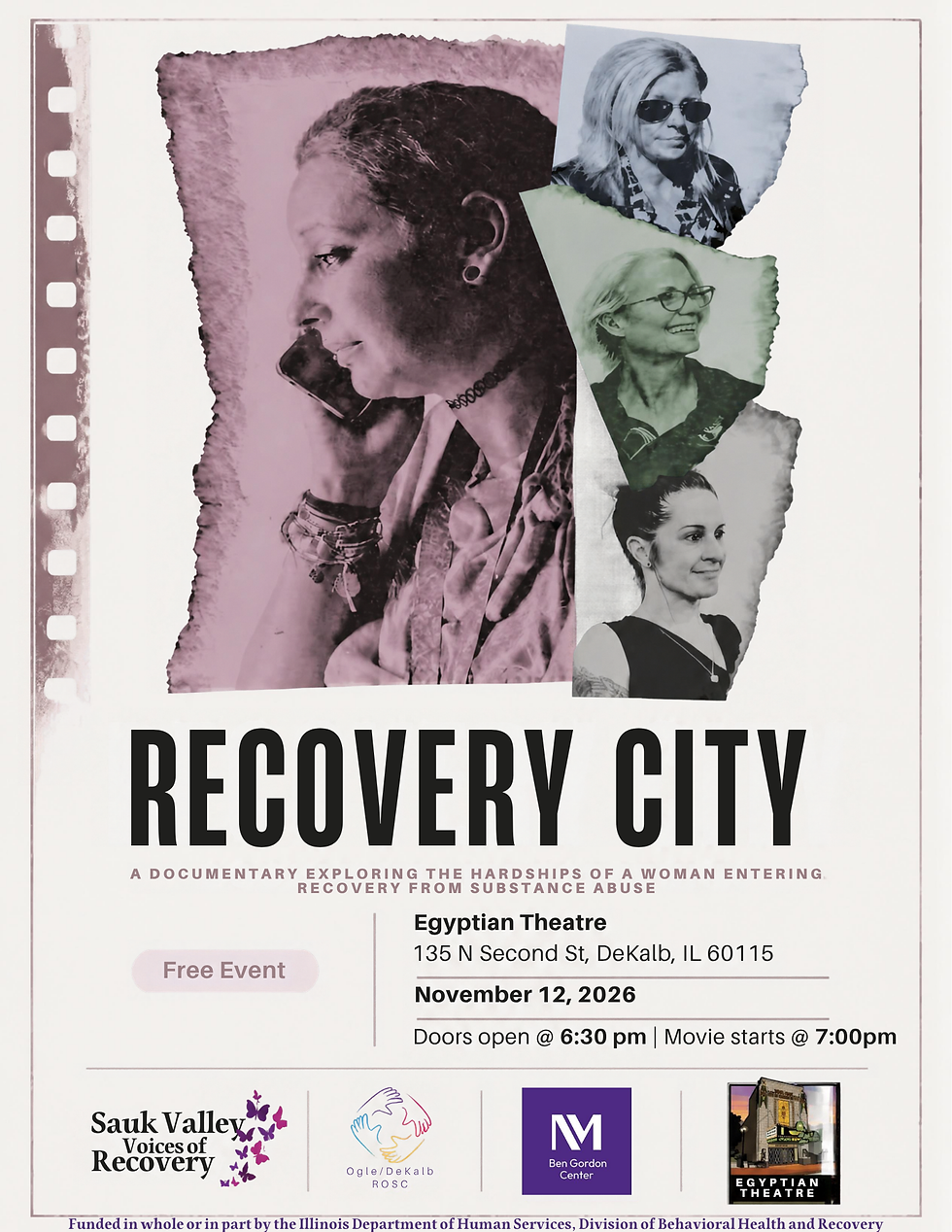
Event details
Whether recovery has been part of personal life, family life, professional work, or simply a topic worth understanding better, this screening offers a meaningful place to begin.
Event detail | Information |
Film | Recovery City |
Date | Thursday, November 12, 2026 |
Time | 6:30 PM |
Location | Egyptian Theater in Dekalb |
Admission | Free |
Focus | The hardships of a woman entering recovery from substance abuse |
The Recovery City Documentary Screening is designed to bring people together around an honest story. Films like this can help put a human face on addiction and recovery. They can move the conversation away from shame and toward care, responsibility, and hope.
No one needs to be an expert to attend. The only thing needed is a willingness to listen.
Why this story matters
Substance abuse and recovery are often talked about in broad terms. People may hear words like relapse, treatment, support, and sobriety, but those words can feel distant until they connect to a real person’s life.
A documentary can make that connection more personal.
When a woman enters recovery, she may face many pressures at once. She may be trying to rebuild trust with loved ones. She may be managing fear, grief, guilt, housing needs, work concerns, health needs, or parenting responsibilities. She may also be carrying the weight of stigma, which can make asking for help even harder.
A film cannot tell every story, and no single story represents everyone. Still, one honest story can help viewers understand how complicated recovery can be. It can show that recovery is not only about stopping substance use. It is also about rebuilding a life.
That rebuilding can include:
Finding safe and steady support
Learning new ways to cope with stress
Repairing relationships when possible
Facing legal, financial, or health challenges
Building daily routines that support healing
Believing that a different future is possible
For many people, recovery begins long before anyone else sees progress. It may start with a private decision, a difficult conversation, or one visit to ask for help. Even getting through the first days can take enormous strength.
That is why public events like this matter. They remind people that recovery is not something that happens in isolation. Communities can either make the road harder through judgment and silence, or they can make it more possible through respect and connection.
A free community screening with room for reflection
Free admission matters. It removes one more barrier for people who want to attend, including families, students, service providers, faith communities, people in recovery, and those who simply want to better understand the issue.
The Egyptian Theater in Dekalb offers a setting where people can come together in a shared space and give their full attention to the film. Watching a documentary in a theater feels different from watching alone at home. The room itself becomes part of the experience. People laugh quietly together, sit in silence together, and leave with thoughts they may not have expected.
This kind of public viewing can also help reduce stigma. Addiction is often surrounded by misunderstanding. Some people still see it only as a personal failure, while others may avoid the subject because it feels too painful or too close to home. A film can help bridge that gap. It gives viewers a story to respond to instead of asking them to debate an abstract issue.
The evening is not about having all the answers. It is about making space for better questions:
What does support look like when someone enters recovery?
How can families care without losing themselves?
What barriers make it harder for women to seek help?
How does shame affect healing?
What can a community do before a crisis happens?
How can people in recovery feel seen without feeling exposed?
These are not easy questions. They deserve patience. They also deserve a room full of people willing to take them seriously.
Recovery is personal, but support is shared
One of the hardest parts of recovery is that the person entering it must do deeply personal work, yet that work happens within a larger world. A person may be trying to change while returning to the same neighborhood, the same stress, or the same painful relationships. They may need help navigating systems that feel confusing or overwhelming.
Support can take many forms. It may be a ride to an appointment. It may be a family member learning to listen without trying to control every outcome. It may be a local organization offering practical resources. It may be a workplace giving someone a fair chance. It may be a friend who checks in after the first week, the first month, and the hard days after that.
Support also means treating people with dignity. Words matter. Assumptions matter. Privacy matters. For someone entering recovery, feeling reduced to past choices can make healing harder. Being seen as a whole person can help create the conditions for change.
This screening gives the community a chance to practice that kind of attention. The focus is on the hardships of a woman entering recovery, but the lessons can reach far beyond one person’s experience. Viewers may leave thinking about someone they love. Others may think about their own story. Some may recognize ways they have misunderstood addiction in the past.
That kind of reflection can be uncomfortable. It can also be useful. Growth often begins when people are willing to sit with discomfort instead of turning away from it.
Who should attend
This free screening is open to community members who care about recovery, public health, family well-being, and honest storytelling. It may be especially meaningful for:
People in recovery or considering recovery
Family members and friends affected by substance use
Students studying health, social work, psychology, justice, or community issues
Counselors, peer support workers, and care providers
Educators, faith leaders, and neighborhood organizers
Anyone who wants to better understand the human side of addiction
Some attendees may come with personal experience. Others may come because they want to learn how to respond with more compassion. Both reasons are valid.
A screening like this can also be a helpful starting point for people who have struggled to talk about addiction with loved ones. Sometimes a shared film makes conversation easier. It gives people a common reference point. Instead of beginning with blame or fear, the conversation can begin with, “What did you notice?” or “What stayed with you?”
That small shift can matter.
What to keep in mind before the film
Because this documentary focuses on substance abuse and recovery, some parts of the story may feel heavy. Viewers may hear or see themes connected to addiction, trauma, grief, family strain, and the difficult early stages of healing.
For anyone with personal experience, it may help to arrive with a plan for support. That could mean attending with someone trusted, taking a quiet moment after the film, or reaching out to a counselor, sponsor, peer support contact, or loved one later in the evening.
This post is for informational and community awareness purposes only. It is not medical advice. Anyone facing an emergency should call 911. Anyone in emotional distress or crisis in the United States can call or text 988 for immediate support.
For many viewers, the film may stir sadness and hope at the same time. That is part of why gatherings like this are valuable. They give people a place to hold both.
Why the community’s presence matters
Showing up is a simple act, but it can carry real meaning.
When community members attend a recovery-focused event, they send a message that people affected by substance use are not invisible. They show that recovery stories deserve public space. They help create a culture where asking for help feels less shameful and where families do not have to suffer in silence.
This matters because stigma can keep people from seeking help. It can make families hide what they are going through. It can turn health and recovery into topics people only discuss after a crisis. By contrast, community education opens the door earlier. It helps people recognize warning signs, understand barriers, and respond with more care.
A documentary screening will not solve every problem. But it can start conversations that ripple outward. A person may leave with more empathy. A parent may feel less alone. A friend may choose to check in on someone. A student may see a future path in service work. A neighbor may think differently before making a judgment.
Those small changes add up.
Make plans to attend on November 12
Mark the calendar for Thursday, November 12, 2026, at 6:30 PM, and join the community at the Egyptian Theater in Dekalb for this free screening of Recovery City.
Arrive ready to listen. Bring a friend, family member, classmate, neighbor, or colleague. If this topic matters to someone nearby, invite them with care. A simple invitation can make it easier for someone to walk into the room.
The evening is an opportunity to honor the difficulty of recovery while also recognizing the strength it takes to begin. It is a chance to see beyond labels and hear a story rooted in struggle, courage, and the search for healing.
Recovery asks a person to keep choosing life, health, and hope, often one hard day at a time. A supportive community cannot do that work for someone, but it can help make the path less lonely.
Join us on November 12 for a night of reflection, compassion, and community. Admission is free, and every person who shows up helps make the conversation stronger.


Comments